
How Can You Prepare for Changing Weather and Unexpected Delays in the Nepal Himalaya?
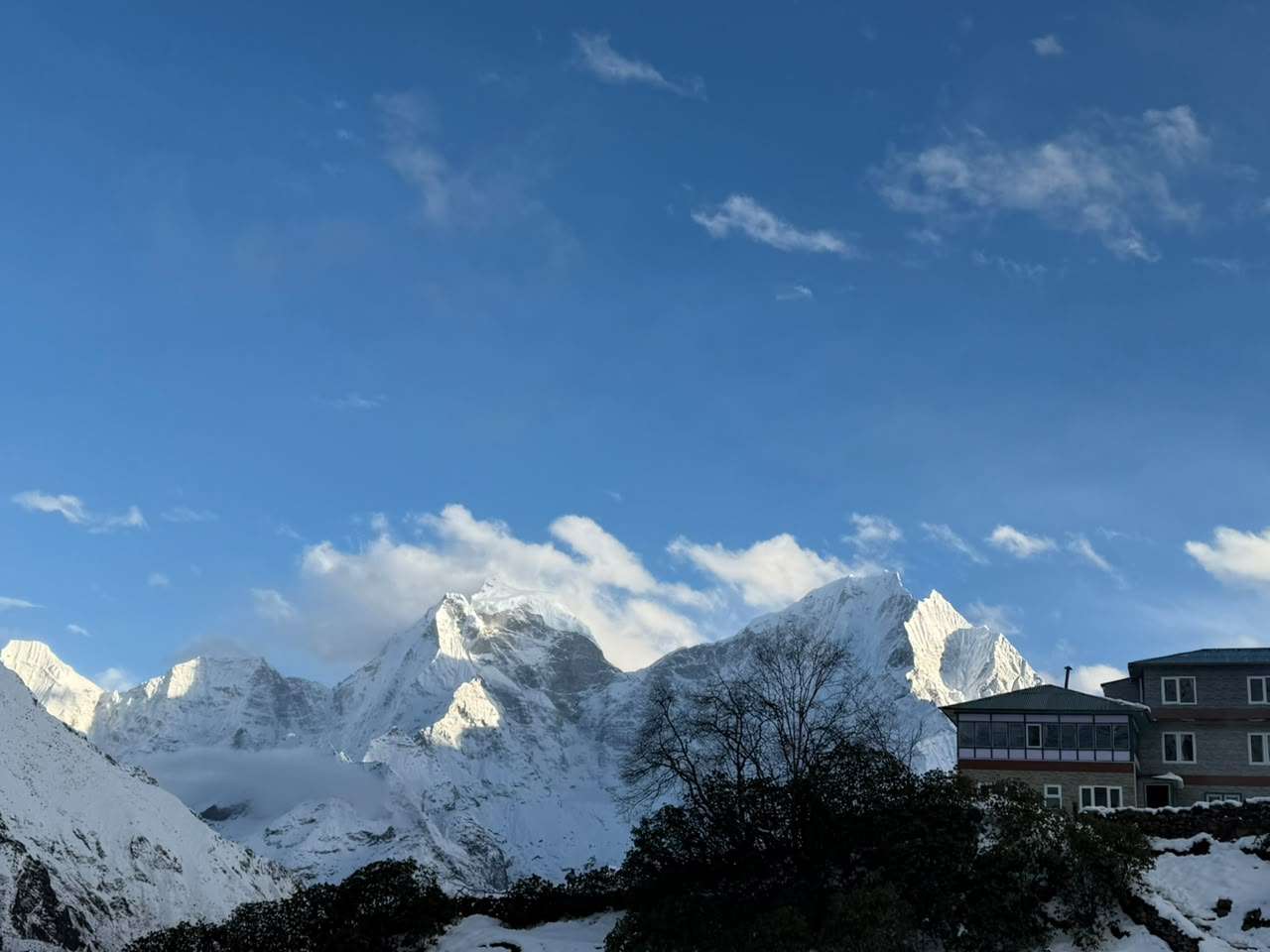
Table of Contents
Introduction
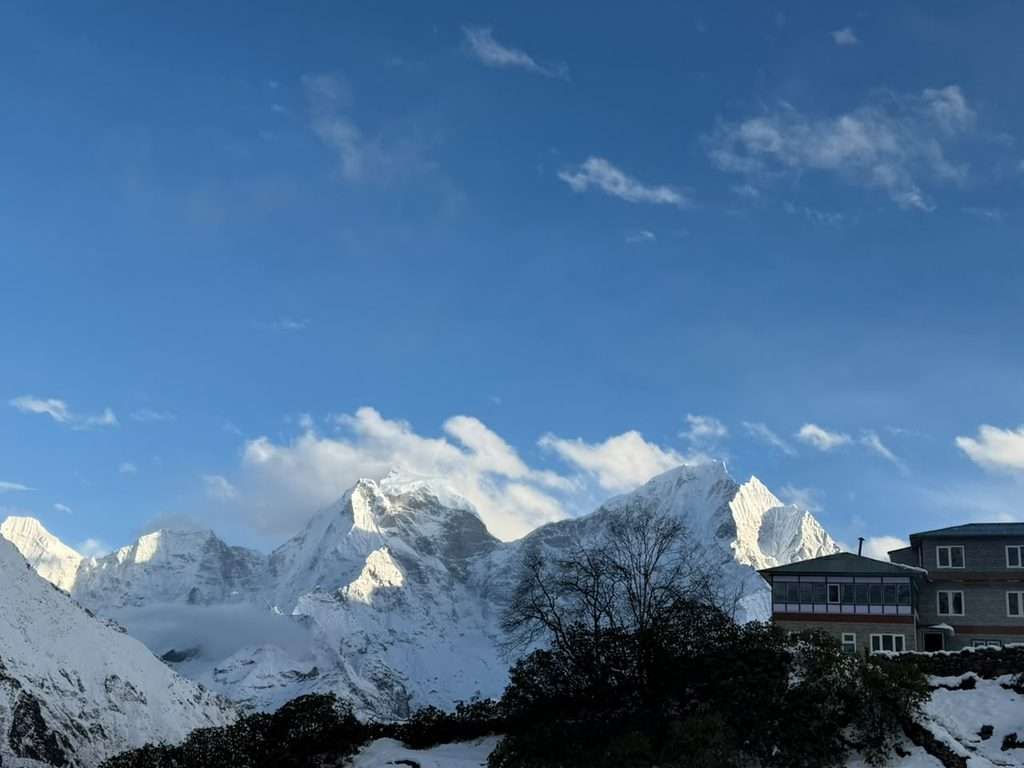
A clear morning high up in the mountains under the snow-capped peaks can turn into mist, gale force wind or thick afternoon snow in the space of a few hours. If you’re going to do an adventure in the roof of the world then getting your Nepal Himalaya weather preparation right is just as important as putting on your boots. The latest advisories from the Department of Hydrology and Meteorology and the tourism authorities point to the very dynamic nature of the weather in the mountains with the late retreating Monsoon and the arrival of a Western Disturbance being the two main factors that can have a significant impact on mountain travel.
At Explore Himalaya Travel and Adventure we absolutely believe that safety and confidence are the foundation of any great journey. This is a complete guide to everything you need to know about Himalayan weather, the year round climate, the tools you need to do weather forecasting, the issue of Lukla flight delays, the importance of having the right travel insurance for Nepal trekking and of course the definitive ‘what to pack for trekking in Nepal’ list.
Why Himalayan Weather Changes So Fast
Understanding the weather in the Himalayas starts with an appreciation of the very particular geography of South Asia. The sheer scale of the topography gives rise to a very distinct mountain microclimate in which the valleys are bathed in warm subtropical sunshine and the ridges just a few km away are exposed to sub-zero alpine gales.
Temperature fluctuations can be quite erratic. You could be hiking in a T-shirt under the scorching midday sun and then within the space of a few minutes the temperature can drop right through the ice point. That’s why Nepal Himalaya weather preparation is such a case of ‘prepare for the worst’ as the conditions can change very dramatically. The valleys are wind funnels and moisture coming up from the Indian plains will meet the freezing high altitude air and produce quite a bit of rain or snow in a very small area with very little warning.
Nepal Weather Year Round and Choosing a Season
Knowing the Nepal weather year round will of course go a long way to helping you establish the best time for trekking in Nepal.
- Spring (March to May): rhododendrons in full bloom, warm and long days, generally clear skies though you do tend to get cloud building up in the afternoons.
- Summer/Monsoon (June to August): Heavy rainfall, leeches and slippery trails all characteristic. The rain shadow areas (e.g. Upper Mustang) are of course dry.
- Autumn (September to November): the big season after the monsoon is over. October and November are the crisp air, clear skies and superb mountain visibility months.
- Winter (December to February): freezing temperatures and high snow passes, perfect for the lower elevation cultural treks.
For a more in-depth look at seasonal planning have a read of our guide on Climate in Nepal Year Round Travel Guide. To get a more precise idea of the windows available then have a look at Best Time to Trek in Nepal: A Complete Guide.
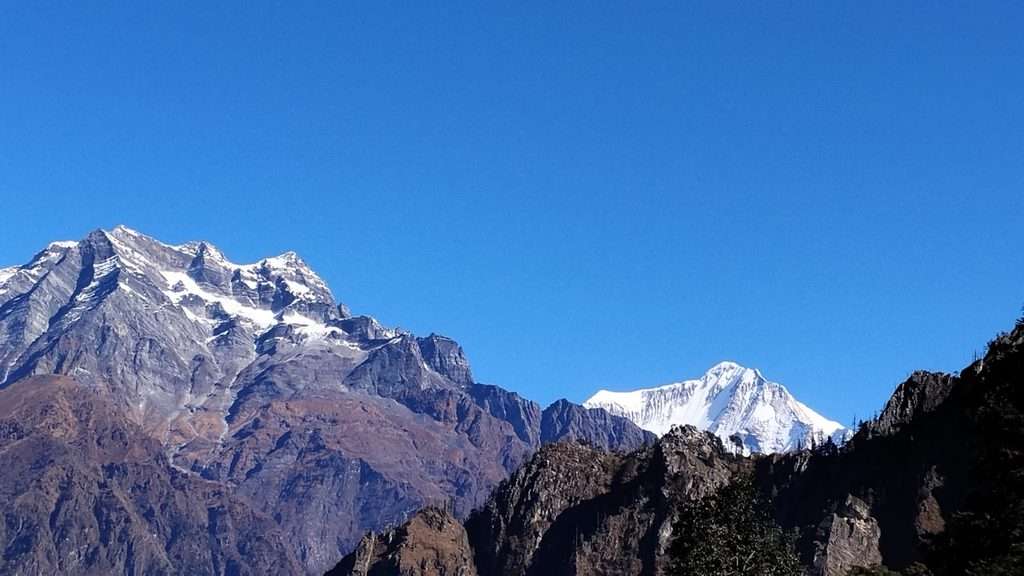
Monsoon, Western Disturbance, and Heavy Rainfall
The summer Monsoon normally dies down by mid-October, though of course there can be unseasonal showers due to atmospheric anomalies and lingering low pressure systems from the Bay of Bengal. Winter sees the arrival of Western Disturbance weather systems from the Mediterranean which can bring sudden snowfall to the high mountain passes.
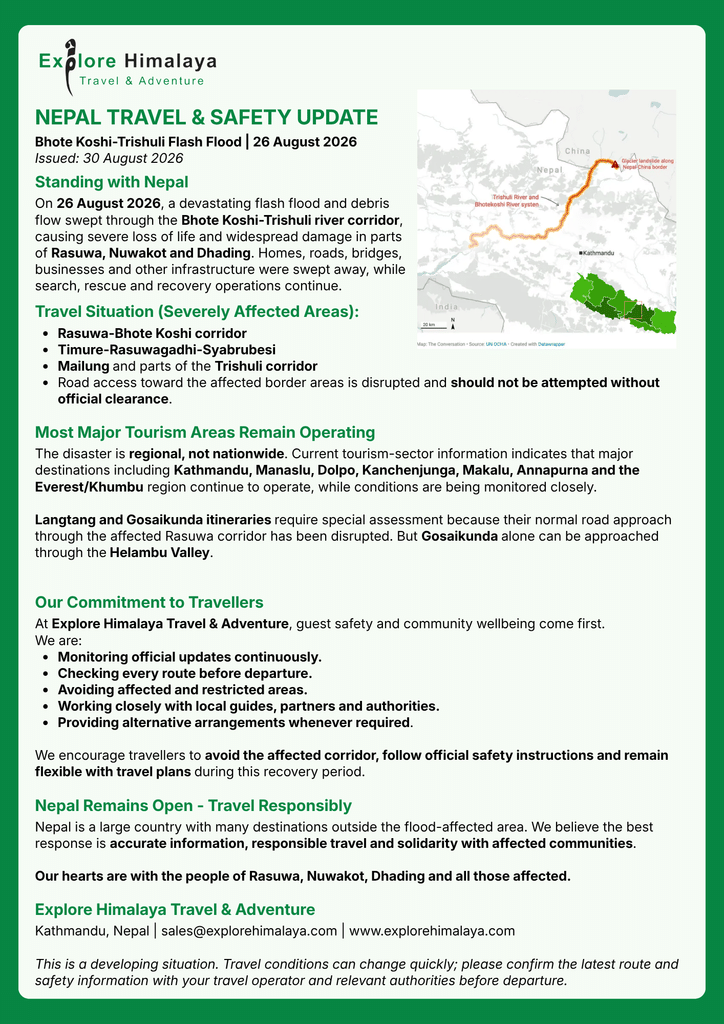
Trekkers need to be prepared for slippery paths, swollen river crossings and potential trail blockages due to a Landslide. High quality waterproof clothing and good pack covers are a must. If you do find yourselves in a river valley situation then always follow local warnings (e.g. the Rasuwa Flash Flood Travel Advisory).
Weather Forecasting and Official Alerts
Reliable weather forecasting is your first line of defence. Mountain weather forecasts are inherently subject to a degree of error so the sensible trekker will combine the digital with the local.
- Check the Official Bulletins: keep a close eye on the updates issued by the Department of Hydrology and Meteorology.
- Lodge and Guide Intelligence: the local tea house owners and the experienced guides have a generational knowledge of the micro weather.
- Daily Reality Checks: treat the mountain forecasts as 3-5 day estimates rather than as absolutes.
For safe Nepal safety travel you must never ignore a ranger’s warning of an impending Avalanche or severe storm warning.
Lukla Flight Delays and Buffer Days
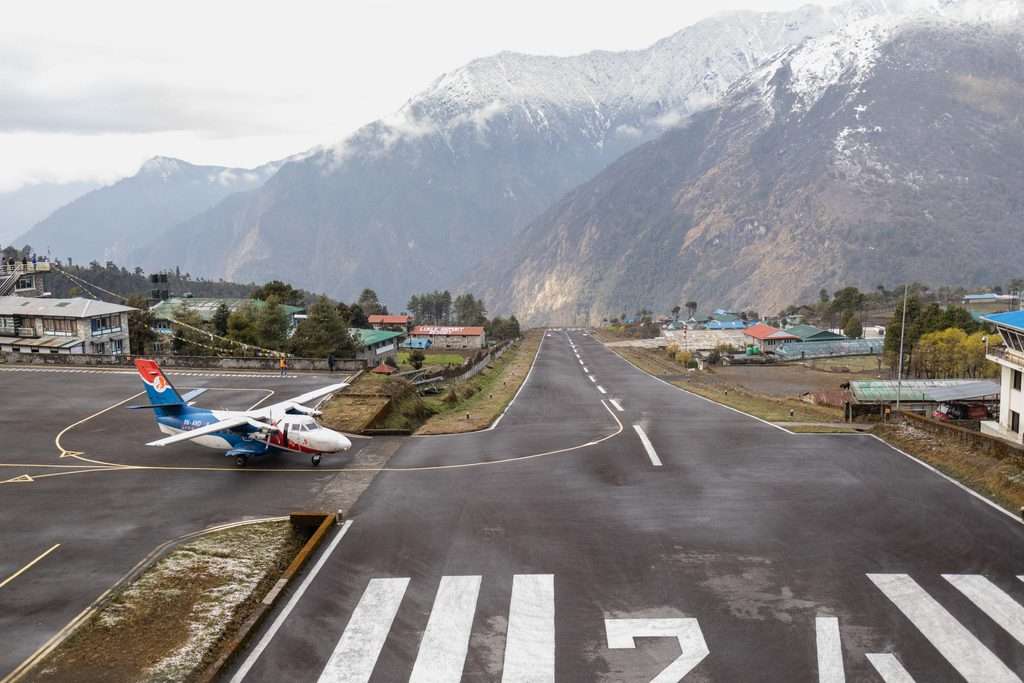
Flights to and from Tenzing-Hillary Airport in Lukla are strictly VFR. If the Himalayan weather turns socked in with fog and low cloud then flights are immediately grounded.
- Typical Delays: Lukla flight delays will usually be 24 to 48 hours though of course with prolonged weather systems you can quite easily end up with delays that go well beyond that.
- Manthali Shift: During the peak autumn and spring seasons, flights to Lukla are frequently diverted to Ramechhap (Manthali Airport) to cope with the volume of air traffic. See more on Domestic Flights in Nepal Guide and our Lukla Flight Unforgettable Adventure.
- The Buffer Day Rule: always build in 2 to 3 buffer days (or 1 slack day per 7 to 10 days of trekking) to your itinerary to absorb any unforeseen transport holds without missing your international connections.
Safety on the Trail (Altitude, Avalanche, Landslide)
Mountain safety goes well beyond just being aware of the weather. High altitude trekking presents a whole host of physiological and environmental hazards.
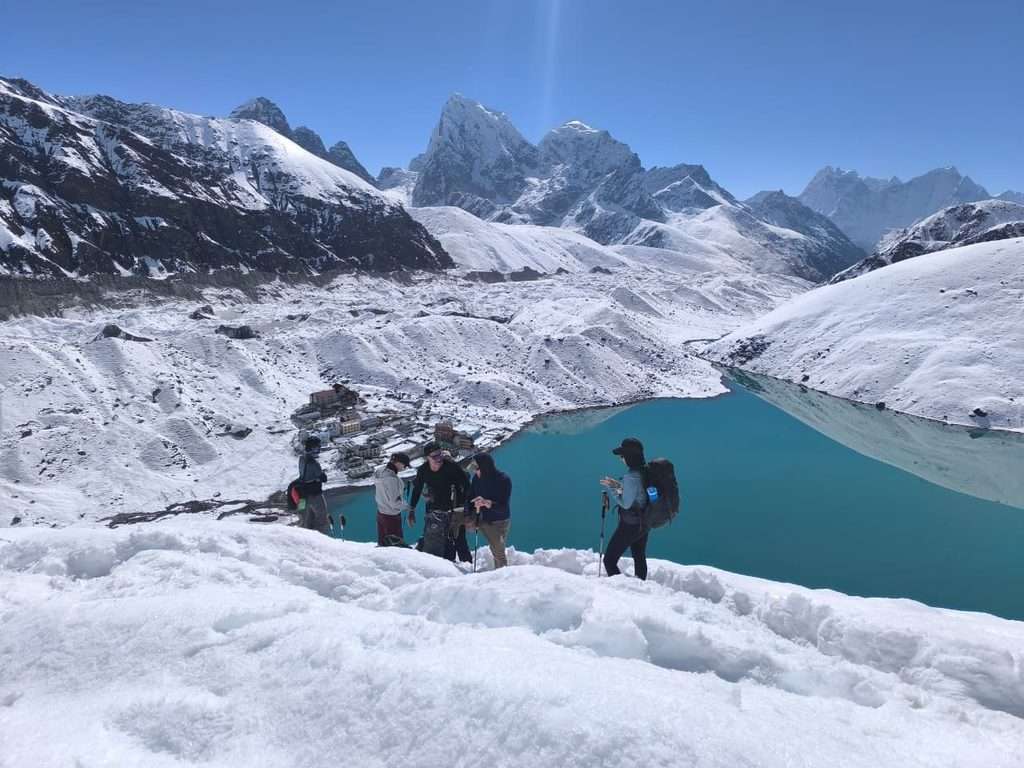
- Altitude Sickness: Altitude sickness (AMS) can affect anyone above 3,000 m. Ascend slowly (300- 500 m per day above 3,000m), stay well hydrated and be aware of the early signs (throbbing headache, dizziness, loss of appetite). See our Acute Mountain Sickness Causes & Symptoms for more on the expert protocols.
- Trail hazards: steep drop-offs, ice patches and unstable scree slopes all require a steady pace and trekking poles.
For a full set of protocols see our resource on Trekking Safety in Nepal Essentials.
Helicopter Evacuation and Travel Insurance
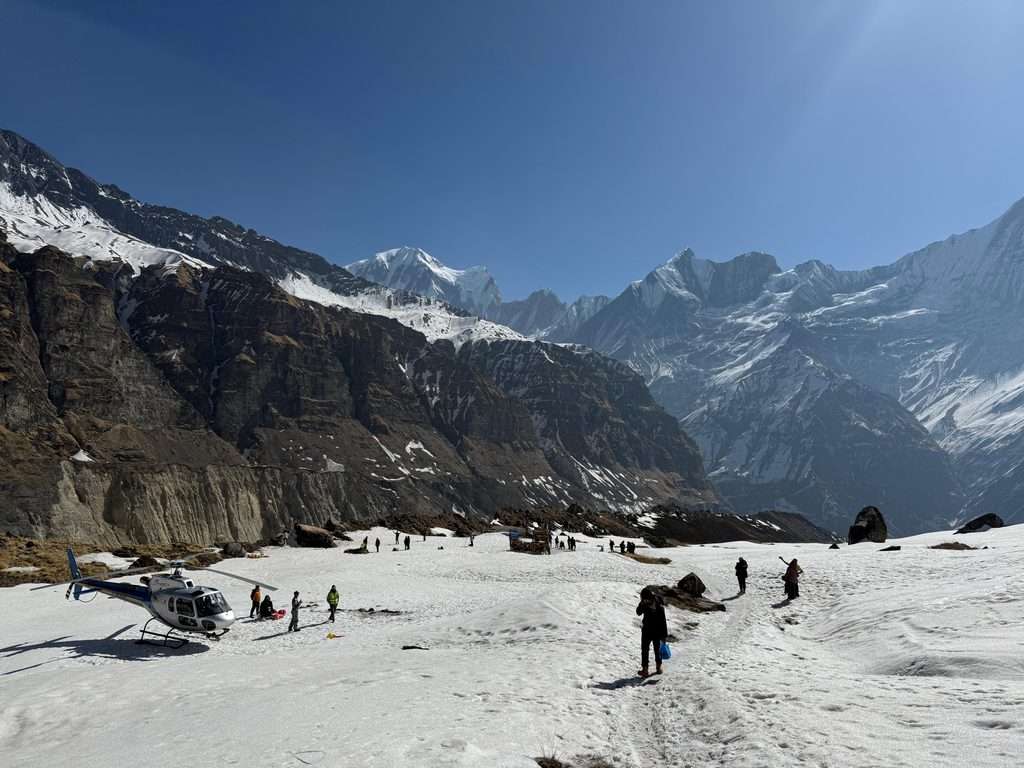
When you absolutely need an emergency intervention due to severe altitude sickness or injury a helicopter evacuation is often the quickest lifesaver. The problem is that helicopters can’t fly through zero visibility fog or in heavy snowstorms.
You absolutely must have comprehensive travel insurance for Nepal trekking. Your policy needs to cover emergency helicopter evacuation up to your max altitude (e.g. 5,500m+), medical repatriation and trip interruption due to weather. See what to look for in our guide on Travel Insurance for Trekking in Nepal. You can also check out our Kathmandu to Lukla Helicopter Flight Services.
What to Pack for Trekking in Nepal
Your gear list has to be adaptable to extreme temperature fluctuations. The right layering will keep you warm, dry and mobile.
- Clothing: Moisture wicking base layers, insulating fleece or down jackets and a breathable, durable shell with reliable waterproof clothing technology.
- Footwear: Broken in waterproof hiking boots, warm merino wool socks and camp sandals.
- Essential gear: Decent trekking poles, a high-lumen headlamp with spare batteries, dry compression sacks, a high capacity power bank (batteries drain very quickly in the cold) and microspikes for icy trails.
For a very granular breakdown see our guide Gears and equipment for trekking in Nepal.
Route Notes: Weather Realities Across Popular Treks
- Everest Base Camp: High altitude cold and the volatility of the flight to Lukla are the two main issues. Acclimatization is absolutely key. Check out our own package at Everest Base Camp Trek Package.
- Annapurna Circuit: You have to cross Thorong La Pass in the morning within the weather window before the high winds and snow flurries come in. Our route details are over at Annapurna Circuit Trekking Guide.
- Manaslu Circuit: A remote restricted area trek through deep river valleys and high mountain passes. See our itinerary here Manaslu Circuit Trek Package.
Conclusion
Getting your head around the changing weather, getting the right permits and managing the logistics of operating in a foreign mountain range can be a real headache. Explore Himalaya Travel and Adventure removes all that stress. We have decades of experience on the ground, professional mountain guides who are fully licensed, 24/7 support from our Kathmandu office and itineraries that are specifically tailored to your own pace. You’re in safe hands from the moment you arrive until the moment you leave.
Our standard transparent tour packages will normally include airport transfers, domestic flights, an experienced government licensed guide and porter, standard teahouse accommodation, three meals a day during the trek and all requisite conservation and park permits. International flights, personal travel insurance, tips and personal gear are normally not included.
Ready to go on your dream Himalayan trek with absolutely zero stress? Get in touch with Explore Himalaya Travel and Adventure and we’ll put together your tailor made trek itinerary.
Frequently Asked Questions
Start by assessing the seasonal microclimate of your particular trekking region as mountain weather can vary dramatically from one place to another depending on altitude and location. Watch the official updates from the Department of Hydrology and Meteorology, pack a good quality layered clothing system and build in 2 to 3 buffer days to your itinerary to allow for the possibility of transport delays or local mountain storms.
Nepal has a climate that is essentially four seasons: Spring (March to May) is when the rhododendrons are in full bloom and the weather is warm; Summer/Monsoon (June to August) is all rain and cloud; Autumn (September to November) is very stable atmospheric conditions with absolutely stunning mountain views; and Winter (December to February) is cold as hell at high altitude and the high passes are snowed in.
The absolute prime seasons are autumn (Sept through Nov) and spring (March through May). Autumn is absolutely superb in terms of mountain visibility, dry trails and the air is absolutely crystal clear after the monsoon has all but gone. Spring is very good too with much milder temperatures, longer days and the mountains are in full bloom. Both are excellent seasons for high passes and base camp.
Yes, you can trek in the monsoon if you go into the rain shadow areas (Upper Mustang, Dolpo, Nar Phu, etc.) which are largely free from the rain. The classic routes (Everest Base Camp, Annapurna Circuit, etc.) are all under the rain shadow though and you’ll be facing heavy rain, very swollen river crossings, mud and leeches. You’ll need high performance waterproof clothing and microspikes in that case.
You should check the official daily weather bulletins from Nepal’s Department of Hydrology and Meteorology as well as some of the more reliable local mountain forecast sites (e.g. Mountain-Forecast). Once you’re on the trail, keep your digital forecast constantly in check with your mountain guide and the tea house folk who will have the very real time information on what’s going on in the valley.
Flight at Lukla (or Manthali/Ramechhap) can hold for anywhere from 1 to 2 days if it’s low cloud, fog or high mountain wind that’s keeping the visual flying conditions at bay. Morning flights can be grounded with very little notice so it’s essential to have some flexibility at the end of your trip to ensure you don’t miss your international flight home.
Yes, specialist trekking insurance is absolutely essential for any mountain expedition in Nepal. The policy must cover high altitude trekking up to your maximum altitude (e.g. 5500m), medical coverage and emergency helicopter evacuation and of course cancellation and delay due to adverse weather.
Put safety first over your schedule. If you’re caught in high winds or a blizzard stop ascending and descend to a safe lower altitude. Make your way to the nearest tea house for shelter. Always follow your experienced guide’s instructions, stick to the marked tracks (to avoid landslides and avalanches) and be aware of the local weather.
Your core packing list has to include a technical 3 layer system (synthetic moisture wicking base layer, insulating fleece or down jacket suitable for sub-zero conditions, wind/waterproof outer layer). You also need to pack a pair of robust, broken in hiking boots, a pair of trekking poles, a high lumen headlamp, UV blocking sunglasses, dry compression sacks, a power bank and some basic personal medical supplies.
You should build in a minimum of 2 or 3 dedicated buffer days into your overall trip schedule (or allow yourself roughly 1 slack day for every 7 or 10 days on the trail). That way you have a buffer against flight cancellations, road blockages, slow acclimatization days and the like without it having any impact on your wider itinerary.
Recommended Blogs

Quick Contact
Testimonial

Apr 2023 I had an incredible experience trekking to Everest Base Camp with Explore Himalaya. Our guides were absolutely amazing. They provided us with exceptional support and guidance throughout the journey. The porters deserve special recognition too for their hard work and dedication. The entire journey was filled with breathtaking views and unforgettable experiences. From the start until the conclusion , every moment was filled with awe and wonder.I highly recommend Explore Himalaya for anyone seeking an unforgettable trekking experience in the Himalayas. Thank you to all the the staff, for making our journey truly exceptional!
Andrea C

13 Day Manaslu Circuit Trek Nov 2018 We have just returned to Kathmandu after a wonderful trek around the Manaslu circuit, starting in Soti Khola and finishing in Jaget. The trek and transport out and back to Kathmandu were very well organized. Our guide, Bharet Rana was excellent, arranging our tea-house accomodation and meals each day, without hitch. He was always good humoured and provided an interesting commentary on sights along the way.
John Chew

Our Everest Base Camp trek was a wonderful and memorable one. Everything was very well organised. Thank you Explore Himalaya and the staffs for such an excellent service. We were taken care of from the moment we landed in Ktm till the day we left. The Guides and the Porters team of Explore Himalaya are very friendly and helpful. They took care of every little things during our trek. Some walked faster, some slowly and few could not but No one was left behind. They walk with your pace and motivates you until you get up.Anuj Pandey, MD of Explore Himalaya was available 24 hours a day when anybody was in need, he even flew to Namche to check if everything was going well and if everybody was doing good. The Guides Bibek Pandey, Bhuwan Tamang and Ram Rajbhandari along with their 5 Porters were the main pillars who made our mission accomplished.I'd highly recommend anybody who wants to travel to Nepal to contact Explore Himalaya and get themselves spoilt and entertained with their excellent service.
Sujeeta Shahi

Helicopter flight to Everest basecamp Mar 2023 Organized for us a life time experience by helicopter to the base camp. Very well organized and all what has been promised was delivered. Would highly recommend this service.
Stefan M
Recommended On.


Partners


Member Of


Handling Events


Audited By


