
What Does a Mountain Guide Do on a Nepal Peak Expedition?
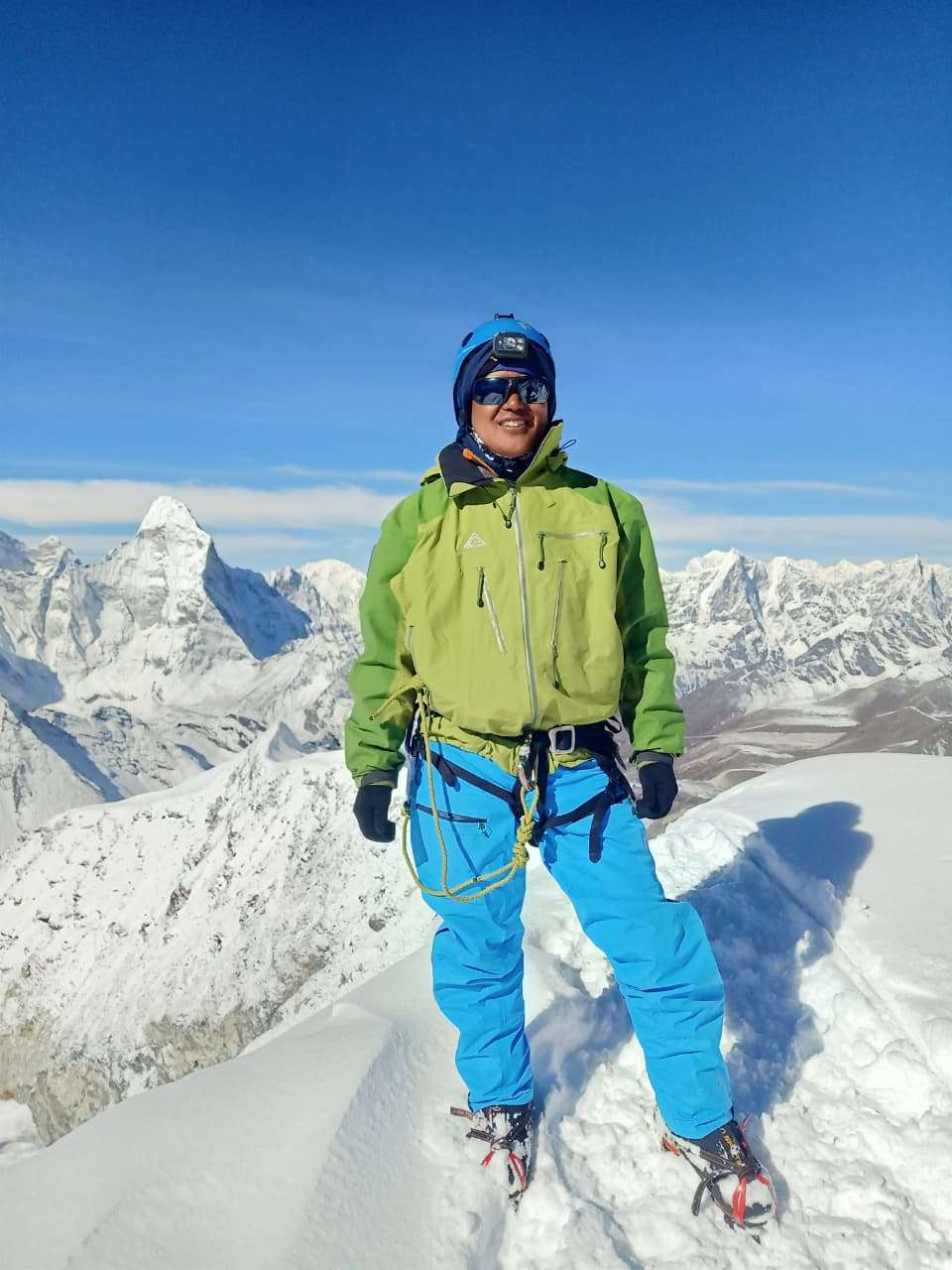
Table of Contents
Introduction
Planning an expedition into the soaring peaks of the Himalaya is absolutely thrilling, but the high altitude terrain is very much a technical and physiological challenge. Getting onto the glaciated slopes above 6,000 m is no simple matter and requires a very high level of experience and skill as a leader to deal with crevasses, the weather and the thin air.
If you’re thinking about doing a trekking in Nepal or indeed your very first Himalayan peak, it’s vital that you understand exactly how an expedition leader will go about protecting your safety and managing the technical risks. At Explore Himalaya Travel and Adventure we have our own fully certified teams who will deal with every aspect of your expedition so you can just concentrate on the climb. This guide looks at the key responsibilities of a professional mountain guide during a Himalayan summit attempt.
Quick Answer Box
What does a mountain guide do on a Nepal peak expedition? A professional mountain guide is the primary safety officer, the technical lead and the route builder in terms of managing the high altitude hazards. They are the ones who do the line fixing, assess the avalanche risk, deal with the medical side of things and make the tactical decisions that allow the climbers to get to the Himalayan summits. Their guide responsibilities are the very thing that separates a simple high altitude trek from actual mountaineering.
What Does a Mountain Guide Do on a Nepal Peak Expedition?
On a Himalayan expedition a professional mountain guide is so much more than just an alpine navigator. They’re the technical expedition leader, the high altitude medic and the weather man all in one.
Operating in the extreme environment requires formal certification from a recognized body (Nepal Mountaineering Association (NMA) or Nepal Mountaineering Instructors Association (NMIA) or Nepal National Mountain Guide Association (NNMGA), representative of the International Federation of Mountain Guides Associations (IFMGA)). The guides will be constantly assessing snowpack, glacier conditions and the physical and mental state of every climber.
Core Functions of a Mountain Guide
| S.N. | Core Function | Key Responsibilities |
| 1 | Technical Safety | Route finding, fixed rope installation, and anchor placement |
| 2 | Health Monitoring | Pulse oximetry, Acute Mountain Sickness (AMS) monitoring, and Lake Louise Score assessments |
| 3 | Risk Mitigation | Weather tracking, hazard assessment, and turnaround decisions |
| 4 | Tactical Logistics | Gear audits, campsite management, and pace control |
Whether you’re leading an amateur climber up a 6,000 meter peak or in the midst of a major Himalayan campaign your guide is ultimately responsible for the safety of the party. Their core guide responsibilities are to set the anchors, manage the roped team’s movement and to decide whether to go on or turn back.
By going with a licensed Himalayan climbing guide you’re tapping into decades of local high altitude experience to maximize your chances of a safe and successful high-altitude mountaineering.
Climbing Guide vs. Trekking Guide: Understanding the Difference
So many people confuse trekking guides with climbing guides. They’re completely different in terms of the training they’ve had and the way they operate.
Comparison between Trekking Guide and Climbing Guide
| S.N. | Trekking Guide | Climbing Guide |
| 1 | Established Trails | Glaciated Alpine Slopes |
| 2 | Teahouse Logistics | Roped Team Leadership |
| 3 | Basic First Aid | Crevasse Rescue and Anchor Systems |
| 4 | Altitude Management | Fixed Rope Ascents |
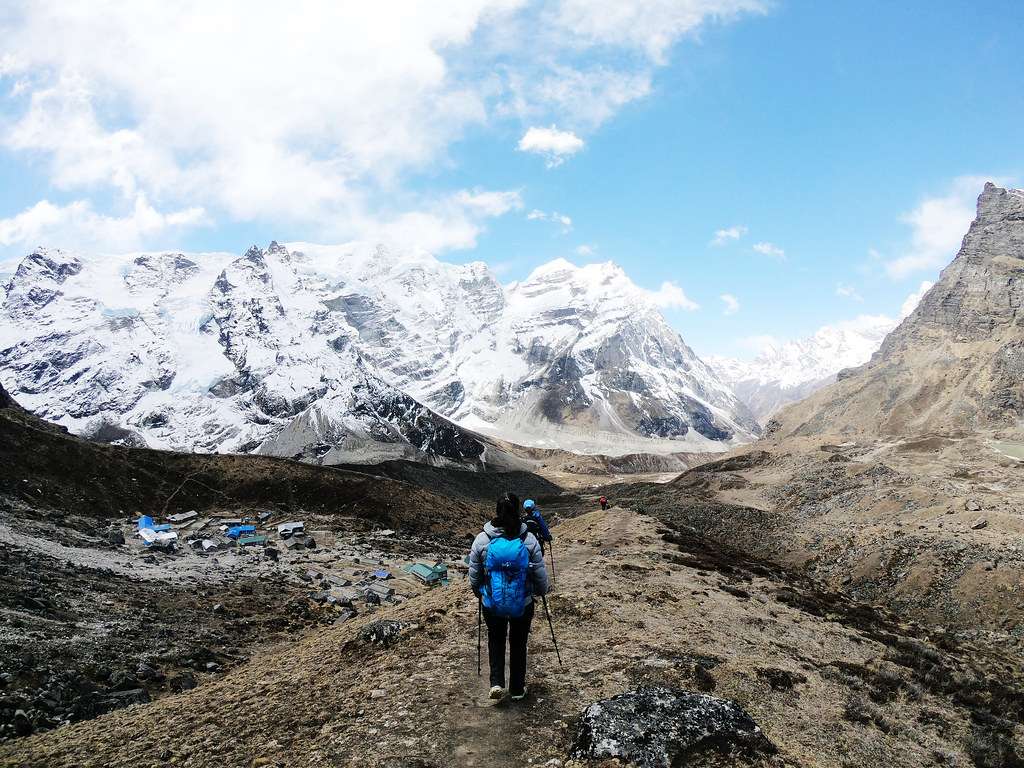
A trekking guide will be responsible for the logistics of the trek, the cultural interpretation and the group pace on the established teahouse trails (e.g. the Annapurna Circuit trek, or the standard Khumbu routes).
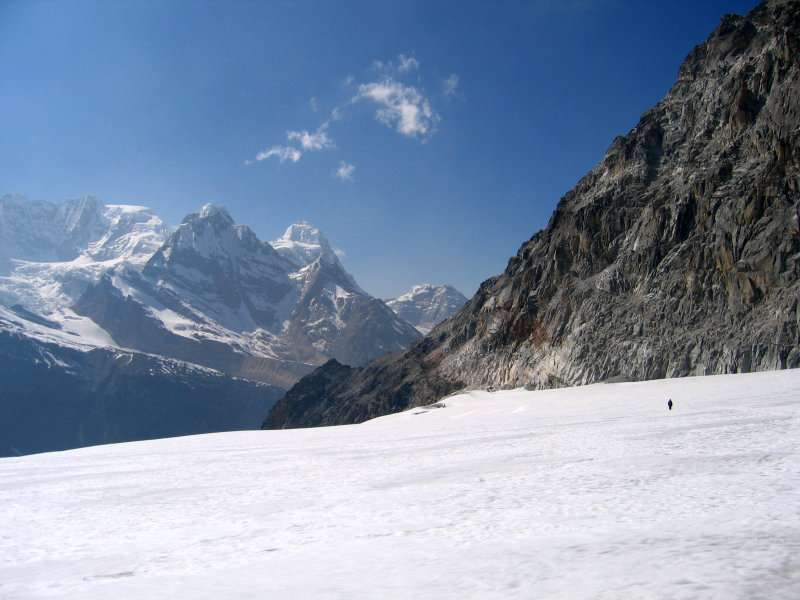
In contrast a Himalayan climbing guide will be in charge of the high altitude glaciated terrain above the snowline. When you move from dirt trails onto snowfields which will require crampons, an ice axe and fixed ropes you’re into the realm of the climbing guide.
| Feature / Responsibility | Trekking Guide | Climbing Guide |
| Primary Terrain | Established trails, passes below 5,500 m | Glaciers, ice walls, peaks above 5,800 m |
| Technical Gear Used | Trekking poles, standard boots | Crampons, ice axe, harness, helmet, ascenders |
| Safety Protocols | Route finding, basic first aid, AMS checks | Roped travel, snow anchor construction, crevasse rescue |
| Primary Certification | NATHM | NMA, NMIA, NNMGA, KCC |
| Logistical Focus | Teahouse rooms, meals, trekking pacing | High camp setup, fixed lines, summit strategy |
Understanding that distinction is the key to getting the right expertise for your itinerary. Himalaya Travel and Adventure have the requisite trekking safety in Nepal experts for the non technical routes and the properly qualified alpine leaders for the technical summit attempts.
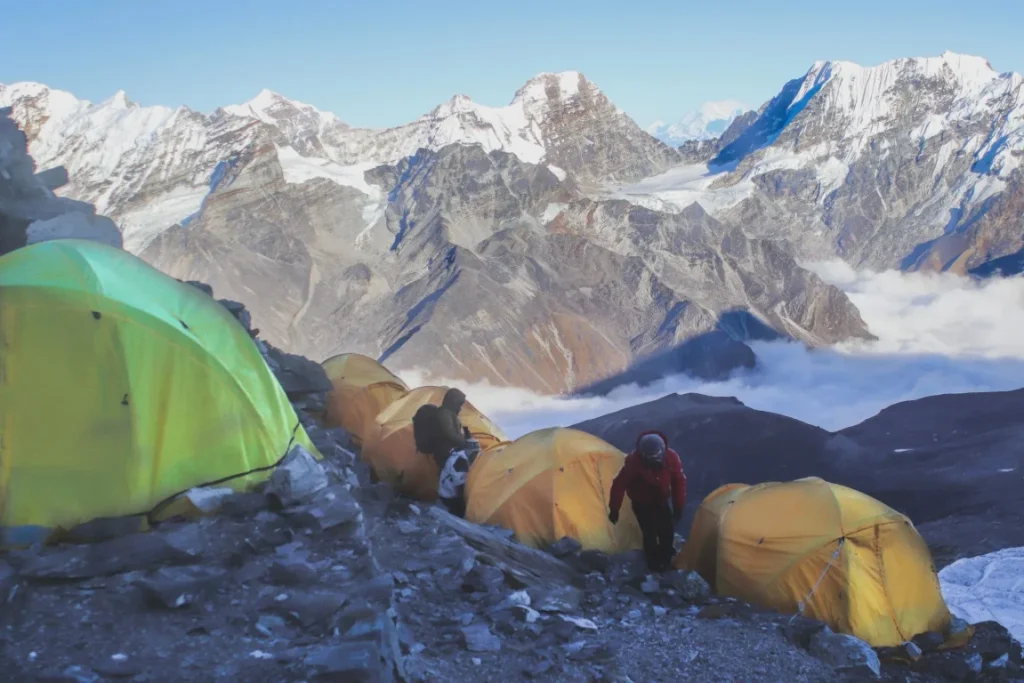
Guide Responsibilities Before the Expedition Begins
A guide’s job begins well before you actually set foot on the mountain. The amount of pre-trip preparation you do is absolutely fundamental to any safe Himalayan climb.
1. Objective Assessment & Peak Selection
Your guide will look at your climbing history, your fitness and your altitude experience to recommend an appropriate peak. A climb like Mera Peak (6,470 m) is going to be all about high level physical endurance on non-technical snow slopes. Island Peak (Imja Tse) (6,165 m) is going to be all about technical comfort on very steep ice walls. A beginner looking for a bit of mixed rock and ice might well look at Lobuche East (6,119 m).
2. Permit & Regulatory Compliance
Getting through Himalayan bureaucracy is a nightmare. Your expedition leader will confirm that you have all the requisite official climbing permits from either the Nepal Mountaineering Association (NMA) or the Department of Tourism as well as the requisite national park entrance fees.
3. Rigorous Safety & Gear Audits
Before you leave Kathmandu or Lukla your guide will check over all your personal technical gear. They check life-safety items against strict standards:
- Mountaineering Harness: checked for webbing wear, buckled security and correct size.
- Climbing Helmet: checked for structural integrity and impact fractures.
- Crampons & Ice Axe: sharpness, leash attachments and boot compatibility all checked.
- High Altitude Footwear: checked for thermal rating and crampon welt fit.
Clients looking at high peaks can refer to our full Mera Peak gear list to ensure they’re bringing gear that is up to alpine standard.
4. Contingency & Buffer Day Planning
Spring (March to May) and Autumn (September to November) are the best time to trek in Nepal and climb the high peaks. Mountain weather is, of course, fickle. Your guide will have flexible buffer days built into the master itinerary to cope with flight holds in Lukla and high winds on the summit ridges.
High-Altitude Acclimatization & Health Monitoring
Proper high altitude acclimatization is absolutely critical when you’re above 4,000 m. The main reason for a failed summit is altitude illness rather than simply being fatigued.
A professional mountain guide actively manages your body’s adaptation process using key protocols:
- Pace Control: Enforce a steady ‘bistari’, ‘bistari’ (slowly, slowly) to avoid over-exertion and to keep heart rates in the aerobic zone.
- Climb High, Sleep Low: Structuring your rotational acclimatization hikes so that you’re at altitude for the day, then returning down to lower elevations to sleep.
- Daily medical screenings: Twice daily use of a pulse oximeter to measure blood oxygen saturation (SpO2) and resting heart rate.
- Lake Louise Scorecard: Assessing the symptoms of Acute Mountain Sickness (AMS) (headache, nausea, fatigue, dizziness, insomnia) to pick up the early warning signs.
Lake Louise Score = Headache (0-3) + Gastrointestinal (0-3) + Fatigue (0-3) + Dizziness (0-3)
- Score >= 3 with headache = Mild AMS (Rest, no further ascent)
- Score >= 6 or worsening = Severe AMS (Immediate descent required)
If a climber is showing the signs of severe AMS, HAPE or HACE the guide will stop the ascent immediately. For more on acclimatization see our high altitude acclimatization resource.
Technical Work on the Mountain
Once you’re up onto the glaciated terrain above base camp the guide’s role is absolutely hands on.
| S.N. | Technical Activity | Key Tasks and Responsibilities |
| 1 | Route Scouting | Identify safe snow bridges, assess crevasse zones, and determine suitable travel routes. |
| 2 | Anchor Building | Install snow pickets, ice screws, and deadman anchors. |
| 3 | Line Fixing | Install fixed static ropes across steep or technically challenging sections. |
| 4 | Roped Travel | Connect team members using harnesses and appropriate rope systems, including butterfly knots where suitable. |
| 5 | Client Coaching | Demonstrate and supervise safe use of ascenders (jumars) and rappelling techniques. |
Your Himalayan climbing guide assumes direct responsibility for managing high-risk terrain:
- Fixed Ropes Installation: On steep headwalls such as the final 100m ice slope on Island Peak (Imja Tse) the guides will anchor their static climbing lines with snow pickets, ice screws or deadman anchors.
- Glacier Travel Management: On heavily crevassed glaciers you will be travelling in a roped team. Your guide will be managing the rope spacing, keeping the lines taut and scouting out the snow bridges.
- Crevasse Rescue Readiness: The guides have their harnesses rigged up with active haul systems (either a 3:1 or a 5:1 mechanical advantage) so that if a climber does break through the snow crust they can be hauled out.
- Base Camp Training: Prior to summit day the guides run mandatory training on crampon footwork, ice axe self-arrest, ascender (Jumar) technique and safety lanyard transfer.
Summit Day Leadership & Tactical Decisions
Summit day is by far the most physically gruelling phase of any Himalayan expedition. The ops will generally be out of the gate between 1 and 3 AM to get through the frozen snowpack and get to the summit before the afternoon winds build up.
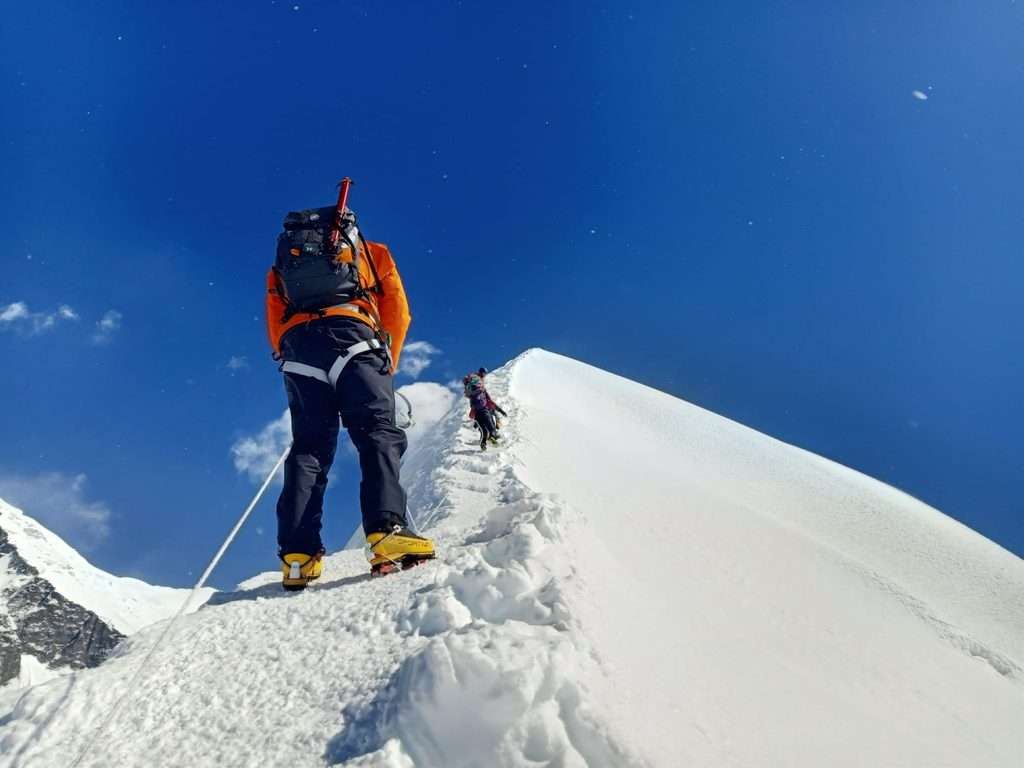
Summit Day Timeline and Turnaround Protocol
| Time | Summit Day Activity | Key Actions / Safety Checks |
| 1:00 AM | Gear Check | Inspect personal equipment, technical gear, communication devices, and safety systems. |
| 2:00 AM | Alpine Start | Begin summit ascent according to the planned route and conditions. |
| 7:00 AM | Technical Wall | Navigate technical terrain, manage rope systems, and monitor team progress. |
| 11:00 AM | Mandatory Turnaround | Initiate descent regardless of summit proximity; reassess cold exposure, wind conditions, and climber fatigue. |
Turnaround Protocol: The 11.00 AM cut-off is a hard safety deadline, not a target we can play around with. We may well have to turn around earlier due to deteriorating weather, fatigue or other hazards.
During the summit push, your guide balances client goals against environmental safety:
- Managing “Summit Fever”: ‘Summit fever’ can set in and climbers can go completely tunnel visioned on the mountain, ignoring their own fatigue and completely ignoring the risk of frostbite. The professional mountain guide has to be objective in that assessment and will call a turnaround if they feel it’s necessary.
- Turnaround Times: Strict cutoff times (usually 11.00 to 12.00). If a climber hasn’t got to the summit of Lobuche East by the cutoff, we turn around irrespective of how close they are to the top.
- Weather and Wind Assessment: the Guides are constantly monitoring ridge winds, cloud build-ups and temperature drops to prevent frostbite and cold related injuries.
- Descend Safety Management: statistically the majority of mountaineering accidents occur on the descent as a result of fatigue. Your guide will be leading your descent, managing your rappel stations and keeping you all secured on the fixed lines until you’re off technical ground.
The Sherpa & Support Team Dynamic
Himalayan expeditions are reliant on a well-structured support system. The Sherpa people of eastern Nepal are of course world-famous for their ability to operate at high altitude, their mountaineering skills and their deep connection to the region.
Expedition Support Structure
EXPEDITION LEADER
- IFMGA Mountain Guide / Lead Guide
- Overall leadership, technical decisions and expedition coordination
HIGH-ALTITUDE SHERPA CLIMBING GUIDES
- Client-to-guide ratio: 1:1 or 1:2
- Technical climbing support, client supervision and high-altitude safety
BASE CAMP MANAGEMENT TEAM
- Base Camp Manager and Kitchen Staff
- Accommodation, catering, communications and camp operations
TRAIL LOGISTICS TEAM
- Porters and Mule Trains
- Transportation of expedition supplies, equipment and provisions
Note: This is a simplified operational hierarchy. The actual staffing and reporting structure would be adjusted according to expedition size, route difficulty and operational requirements.
On the technical peaks, Explore Himalaya Travel and Adventure have the climbers with experienced Sherpa climbing guides at very low ratios (usually 1:1 or 1:2 on summit day) so you do get a very personal touch on the technical bits.
While the porters and kitchen staff are looking after the camp end of things, the climbing Sherpas are working hand in hand with the lead guide to carry the loads, set the high camps, boil the snow and look after the clients up on the mountain.
Medical Response & High-Altitude Safety Protocols
When you’ve got a medical emergency up in the mountains a guide’s ability to respond can be the difference between life and death.
Guides who are certified will have completed an intensive wilderness first aid course. Key emergency capabilities include:
- Supplemental Oxygen & Hyperbaric Gear: running bottled oxygen systems and Gamow bags to help climbers who are suffering with severe HAPE or HACE.
- Emergency Rapid Descent: Coordinating physical evacs down to lower altitudes (often in conjunction with organizations such as the Himalayan Rescue Association).
- Helicopter Evacuation Logistics: Use satellite phones or Garmin InReach units to communicate with Kathmandu ops, coordinate the medical flights and clear the LZS above 4,000 m.
Guide Qualifications & Verifying Credentials
Not all guiding licenses are created equal. Understanding the structure of guide qualifications in Nepal will help you to pick the right, properly qualified operator.
- IFMGA / UIAGM Certification: the gold standard for mountain guides, requiring many years of training in rock, ice and ski mountaineering.
- NMA Certified Climbing Guide/Mountain Leader Certification: Advanced training delivered by the Nepal Mountaineering Association (NMA) in conjunction with various international alpine bodies. The course covers technical rigging, avalanche safety and high altitude rescue.
- NATHM Trekking Guide License: The mandatory base license issued by the Government for non-technical trekking routes.
How to Verify a Guide’s Credentials
Before booking an expedition, ask your operator for:
- Official guide license number issued by the NMA (or Nepal National Mountain Guide Association (NNMGA))
- Proof of a comprehensive high altitude rescue and medical insurance policy covering the guide team.
- Have the full history of the summit on your target peak documented.
How to Choose the Right Expedition Guide
Select the right partner for your Himalayan climb and you’ll find that you need to look beyond the package price. The low-cost operators will often have very poor guide to client ratios, substandard safety equipment and no staff insurance.
- Verified Professional Qualifications: Valid NMA/IFMGA certs and guiding qualifications.
- Controlled Guide-to-Client ratio: A maximum of 1:2 during summit day operations.
- Structured Acclimatisation Schedule: Dedicated acclimatization and contingency days.
- Comprehensive Staff Protection: Appropriate medical, accident and emergency evacuation insurance for all staff.
- High Altitude Emergency Preparedness: Fully equipped emergency systems (including supplemental oxygen and pulse oximeters).
When evaluating a prospective Himalayan climbing guide, ask these essential questions:
- Summit Day Guide Ratio: what’s the maximum client to guide ratio on summit day?
- Acclimatization and Buffer Days: are there any dedicated acclimatization and contingency days in the itinerary?
- High Altitude Emergency Preparedness: what emergency oxygen systems, medical supplies and rescue gear are carried to High Camp?
- Travel and Evacuation Insurance: Does the agency require comprehensive travel insurance to cover high altitude trekking, mountaineering, emergency medical treatment and helicopter evacuation above 6,000 m?
Cultural Liaison & Environmental Stewardship
A great guide will connect you with the heritage of the Himalaya and the fragile ecosystems that exist there.
Cultural Bridge
Your guide will be able to facilitate all the necessary interactions in the Sherpa and Rai villages, will be able to explain the Buddhist traditions at the monasteries and will ensure that the correct rituals and customs are observed during the pre-climb Puja at Base Camp.
Leave No Trace Ethics
High-altitude environments are delicate. Expedition guides enforce strict waste management protocols:
- Carrying all the non-biodegradable waste off the mountain.
- Managing human waste at the high camps.
- Use clean burning fuel rather than firewood to help preserve the delicate alpine shrub-lands.
Plan Your Himalayan Expedition with Explore Himalaya
Stepping onto a Himalayan peak is a life changing thing. Having an experienced expedition leader with you makes all the difference in terms of safety, management and the sheer quality of the experience.
Whether you’re after a classic trek or you’re aiming at a 6,000 m summit, we can put together the perfect itinerary for you. Get in touch with Explore Himalaya Travel and Adventure and start planning your adventure today!
Frequently Asked Questions
A mountain guide is the overall leader and safety manager on an expedition. They’re responsible for the route planning, assessing the micro weather, reading the snowpack, setting up fixed ropes and ice anchors and managing the movement of the roped team across the glacier. They do the daily health checks (using pulse oxys) to monitor oxygen saturation and will have the emergency protocols in place should the worst of the weather or a medical issue arise during the trekking in Nepal.
A trekking guide is concerned with the non-technical aspects of trail running, lodge logistics, cultural stuff and group movement on the established teahouse routes. A climbing guide on the other hand is the one who leads the technical operations above the snowline. A Himalayan climbing guide is trained in all aspects of high altitude alpine safety, glaciated travel, crevasse rescue, anchor building, fixed line work and coaching clients in the use of crampons and ice axes.
A licensed climbing guide in Nepal must have either NMA high altitude certification or IFMGA international accreditation. They must also have current WFR or 80 hour high altitude first aid and must have demonstrable technical leadership experience on 6000m peaks or higher.
No IFMGA cert is absolutely mandatory for guiding the 6000m trekking peaks such as Mera Peak and Island Peak. IFMGA is of course the ‘gold standard’ of international mountain guide qualification, but an NMA certified climber who has done the requisite fundamental and advanced mountaineering training and has many years of local summiting experience will quite regularly go up and do a very safe and successful expedition.
Guides are very much in control of altitude illness. They’re very much in the driver’s seat with regard to pacing (bistari, bistari), they insist on hydration and they have acclimatisation days built into the schedule. Each day they’ll check your oximeter in the morning and again in the evening and assess your symptoms using the Lake Louise score. If you’re showing the early signs of AMS they’ll alter the schedule. If you’re showing the more serious signs of HAPE or HACE they’ll insist on a descent.
At Explore Himalaya Travel and Adventure we keep very strict safety ratios on the technical ground. On the non-technical approach days we keep our group ratios very small. During the actual summit push on peaks such as Mera Peak and Island Peak we go to a 1:1 or at most 1:2 guide to climber ratio. That means every individual climber is in continuous roped support, has the full attention of the guide and is getting the individual assistance they need on the steep headwalls.
Yes, the high altitude climbing guides do climb with the clients from high camp all the way to the summit. They lead the roped team, fix the static lines, haul the group’s essential kit, prepare the hot fluids and do the safety checks at every anchor point. Their high altitude experience and their experience of leading to the summit is absolutely critical to a safe and successful climb.
When you’re in the glaciated terrain all team members are still in the taut rope team with the guide in control. In the event of a crevasse fall the guide and team will all immediately self-arrest to take the load. The guide will then establish a secure snow anchor, check the climber directly and then deploy a mechanical advantage haul system (either a 3:1 or a 5:1 Z-drag) to get the climber out of the crevasse safely.
Yes, a novice climber can absolutely get to the top of Lobuche East or Island Peak provided they have the requisite level of cardio and mental toughness. Prior to the summit push we have a mandatory base camp training session where our guides will go through you in detail on how to wear your mountaineering harness, how to fit your crampons, how to do an ice axe self-arrest, how to use an ascender (Jumar) on fixed rope and how to safely rappel using a figure 8 or belay device.
Before you commit to any expedition operator you must get the full name of your guide and their NMA or NNMGA license number. Your operator must be able to provide you with written proof of high altitude rescue and medical insurance for the whole support team. For more on the amazing Nepali mountaineers who are literally carving their way through the Himalaya, check out our special feature on the female guides.
Recommended Blogs

Quick Contact
Testimonial

Apr 2023 I had an incredible experience trekking to Everest Base Camp with Explore Himalaya. Our guides were absolutely amazing. They provided us with exceptional support and guidance throughout the journey. The porters deserve special recognition too for their hard work and dedication. The entire journey was filled with breathtaking views and unforgettable experiences. From the start until the conclusion , every moment was filled with awe and wonder.I highly recommend Explore Himalaya for anyone seeking an unforgettable trekking experience in the Himalayas. Thank you to all the the staff, for making our journey truly exceptional!
Andrea C

13 Day Manaslu Circuit Trek Nov 2018 We have just returned to Kathmandu after a wonderful trek around the Manaslu circuit, starting in Soti Khola and finishing in Jaget. The trek and transport out and back to Kathmandu were very well organized. Our guide, Bharet Rana was excellent, arranging our tea-house accomodation and meals each day, without hitch. He was always good humoured and provided an interesting commentary on sights along the way.
John Chew

Our Everest Base Camp trek was a wonderful and memorable one. Everything was very well organised. Thank you Explore Himalaya and the staffs for such an excellent service. We were taken care of from the moment we landed in Ktm till the day we left. The Guides and the Porters team of Explore Himalaya are very friendly and helpful. They took care of every little things during our trek. Some walked faster, some slowly and few could not but No one was left behind. They walk with your pace and motivates you until you get up.Anuj Pandey, MD of Explore Himalaya was available 24 hours a day when anybody was in need, he even flew to Namche to check if everything was going well and if everybody was doing good. The Guides Bibek Pandey, Bhuwan Tamang and Ram Rajbhandari along with their 5 Porters were the main pillars who made our mission accomplished.I'd highly recommend anybody who wants to travel to Nepal to contact Explore Himalaya and get themselves spoilt and entertained with their excellent service.
Sujeeta Shahi

Helicopter flight to Everest basecamp Mar 2023 Organized for us a life time experience by helicopter to the base camp. Very well organized and all what has been promised was delivered. Would highly recommend this service.
Stefan M
Recommended On.


Partners


Member Of


Handling Events


Audited By


