
What Is It Really Like to Climb a Himalayan Peak in Nepal?
Table of Contents
Introduction
Postcard pictures depict happy climbers standing proudly below a clear blue sky with the huge white peaks as a background. However, behind that peaceful picture there is a harsh and demanding reality: severe pre-dawn sub-zero winds, air so thin that each step seems heavy, and a departure at midnight under a starry sky. If you decide to Himalayan peak climbing in Nepal, you enter a realm of amazing grandeur and real physical difficulty, and at Explore Himalaya Travel and Adventure our experienced guides have had decades of experience traveling along these icy ridges.
Whether you are planning your first venture into high altitude mountaineering or preparing for serious Himalayan mountain climbing, this comprehensive guide breaks down everything you need to know-from alpine grades and essential gear like crampons and ice axes to mastering high-altitude acclimatization and executing a flawless summit day.
What Himalayan Peak Climbing in Nepal Actually Involves
Himalayan peak climbing in Nepal lies somewhere between ordinary trekking and technical expedition mountaineering; the activity is officially overseen by the Nepal Mountaineering Association (NMA), which divides the mountains into Group A (expedition peaks) and Group B (trekking peaks). The majority of the peaks that are most popular belong to the trekking peak category and have elevations roughly between 5,500 and 6,500 meters.
Alpine grading systems typically classify these ascents from Yala Peak (F – Facile or easy) to Mera Peak (PD – Peu Difficile), Island Peak (PD), and Lobuche East (PD+). Unlike vertical rock walls in the Alps or Yosemite, your journey involves walking up long snow slopes, glacier travel, and scaling fixed ropes on relatively short steep sections.
- The Approach: A normal trip includes 8 to 12 days of trekking in teahouses to build up endurance and to help with high-altitude acclimatization, after which there are 2 to 4 days devoted to the base camps, the high camps, and the ascent to the summit.
- No Extreme Rock Climbing Needed: You do not need to be a seasoned rock climber, but you must be comfortable walking on snow and ice while attached to a fixed rope.
- Professional Guidance: By government regulation, all NMA peaks require a certified climbing guide. Our team at Explore Himalaya Travel and Adventure ensures expert instruction on safety protocols before you step onto the ice.
For deeper insights into regional options, explore our guides on Popular Trekking Peaks in Nepal and 6,000m Peak Guide.
Where You Climb: Khumbu Valley, Sagarmatha National Park and Annapurna Conservation Area
The main climbing areas in Nepal are located in famous protected regions and provide both different landscapes and cultural immersion.
- Khumbu Valley & Hinku Valley: This area is well known for its famous mountains and contains the renowned routes to Island Peak, Mera Peak, Pokhalde Peak, Chola Tse, and Lobuche East. Landing in Lukla is the first step towards experiencing life in a high mountain region.
- Langtang & Jugal Himal: In the area around Yala Peak, Naya Kanga, Bowden Powell Scout Peak, Langtang Ri which is located north of Kathmandu, one can gain a quieter and more culturally diverse introduction to high altitude without having to deal with the large number of tourists found at Everest.
- Annapurna Conservation Area: It has peaks such as the Chulu Far East, Chulu East, Pisang Peak, Thorung Peak, and CHulu West and includes dramatic arid gorges, villages influenced by Tibetan culture, and extensive alpine views.
Permits and Logistics
If you want to climb legally, you need the appropriate paperwork as specified by the current Peak Climbing Fees Revised NMA. This paperwork includes the NMA climbing permit, entry permits for local conservation areas (for example, those for Sagarmatha National Park or the Annapurna Conservation Area), and a TIMS card or a Local Area Permit. In addition, peaks above 6,500 metres also require a designated Government Liaison Officer.
For more information on regional trekking routes, please see our resource pages Everest Region Trekking, Best Treks in Everest Region, and Annapurna Circuit Trekking Guide.
Which Peak Fits You? Island Peak, Mera Peak, Lobuche East, Yala Peak and Chulu Far East
Choosing the right mountain depends on your previous trekking experience, technical comfort, and personal goals.
Yala Peak (5,500m) – Grade: F
- Most suitable for: those who are completely new to the subject and want a simple, non-technical overview of high altitude.
- Overview: Yala Peak is situated in the pristine Langtang Valley and has simple snow slopes with few crevasses together with rewarding panoramic views of Shishapangma.
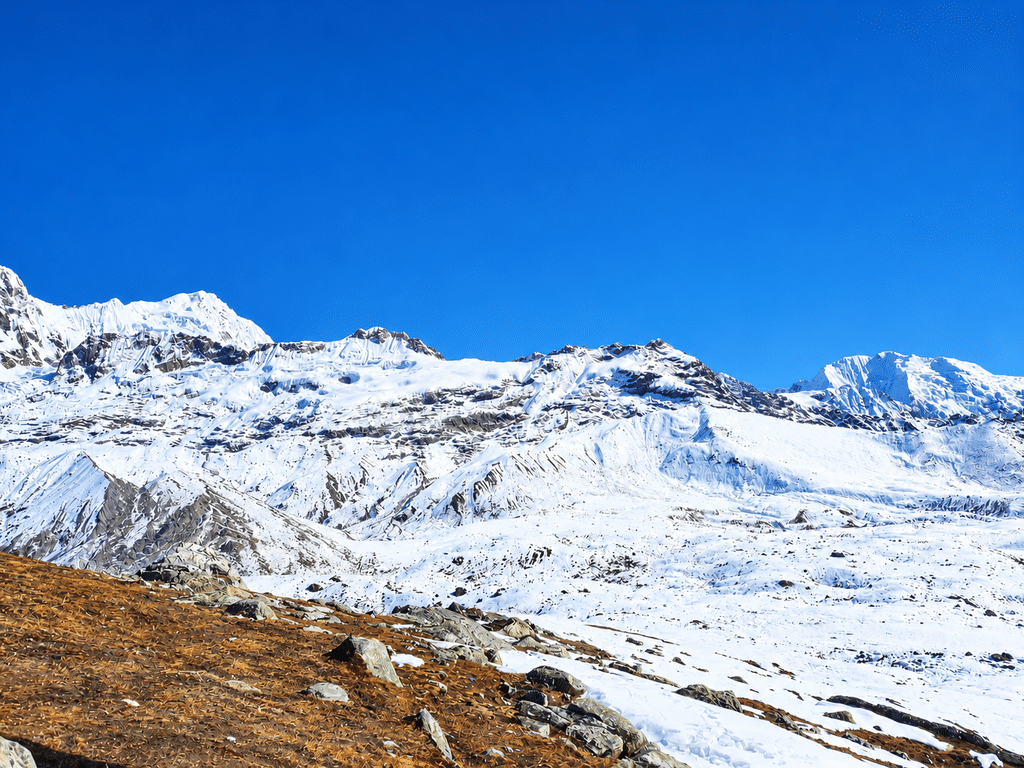
Mera Peak (6,470m) – Grade: PD
- Most suitable for: hikers seeking endurance who want to reach the highest summit on the trek without having to do steep rock climbing.
- Overview: Although Mera Peak is technically simple, it is physically demanding because of its elevation and the long stretches of glacier that it involves.
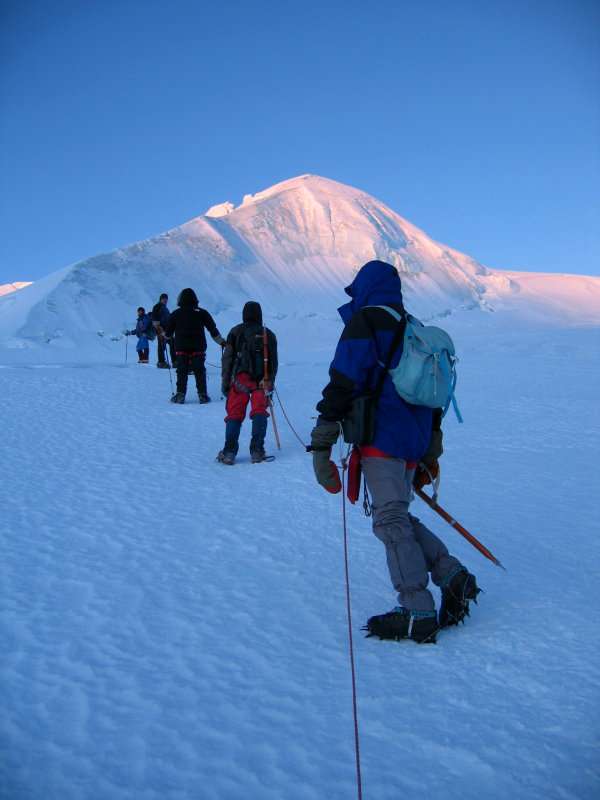
Island Peak/Imja Tse (6,165m) – Grade: PD
- Most suitable for: trekkers who are adventurous and willing to climb fixed ropes as well as face an exposed headwall.
- Overview: The island peak is situated in the center of the Khumbu Valley and has a well-known 100-metre vertical ice and snow headwall which puts your ascender skills to the test.
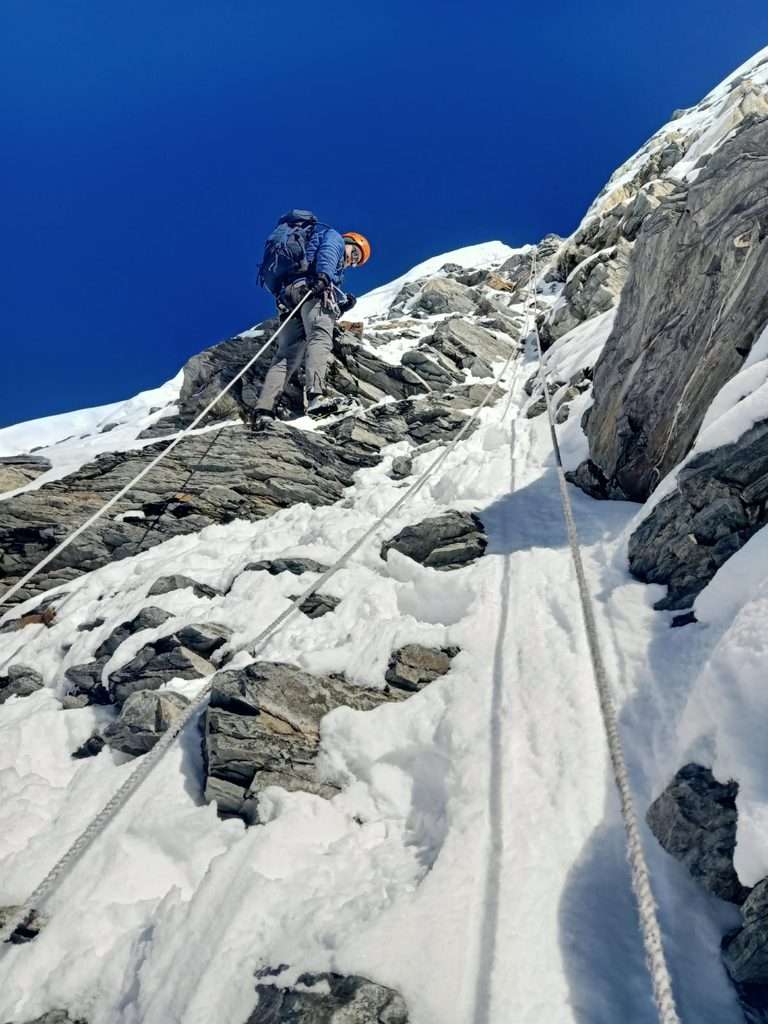
Lobuche East (6,119m) – Grade: PD+
- Most suitable for: climbers who are seeking a steeper and more technical alpine ridge adventure.
- Overview: Lobuche East has rocky scrambling, involves traversing exposed ridges, and provides amazing closeness to Everest.
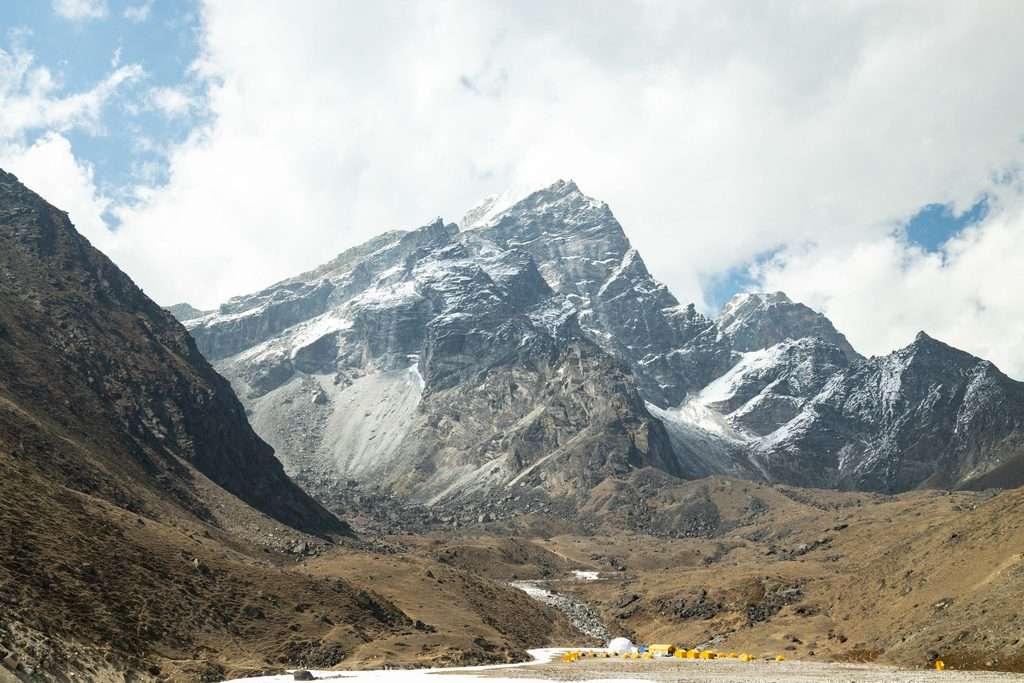
Chulu Far East (6,059m) – Grade: F
- Most Suitable for: People trekking in the Annapurna Conservation Area who are looking for a secluded and highly rewarding summit climb.
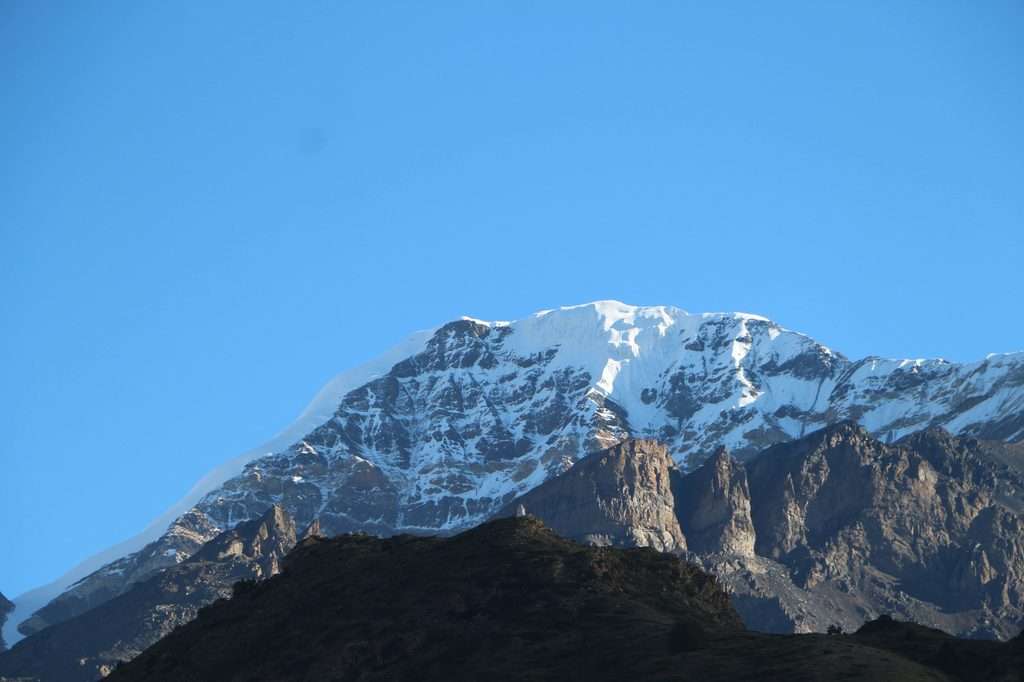
- Overview: The Chulu Far East demands a high level of endurance, involves a need for knowledge of the glaciers, and calls for a long approach via Manang.
| Peak Name | Elevation | Technical Grade | Best Season | Primary Challenge |
| Yala Peak | 5,500m | F | Spring / Autumn | Altitude & stamina |
| Mera Peak | 6,476m | PD | Spring / Autumn | Extreme altitude & distance |
| Island Peak | 6,165m | PD | Spring / Autumn | Steep headwall & fixed lines |
| Lobuche East | 6,119m | PD+ | Spring / Autumn | Technical ridge & rock scrambling |
| Chulu Far East | 6,059m | F | Spring / Autumn | Remote approach & weather shifts |
Have a look at our special package itineraries: Island Peak Climbing, Mera Peak Climbing, Lobuche East Peak, Yala Peak, Chulu Far East Peak, and our in-depth Island Peak vs Mera Peak Comparison.
Daily Life and High-Altitude Acclimatization
Success in high altitude mountaineering depends completely on careful high-altitude acclimatization. Our itineraries strictly adhere to the golden rule of mountaineering: climb high and sleep low. The inclusion of rest days, proper hydration, and a slow ascent schedule gives the body time to get used to the falling barometric pressure.
Managing Acute Mountain Sickness (AMS)
Things like a dull headache in the evening, mild nausea, or restless sleep are common. But if the warning signs are ignored it is possible to develop serious conditions such as High Altitude Pulmonary Edema (HAPE) or High Altitude Cerebral Edema (HACE).
- The Golden Rule: The only effective remedy if the symptoms continue or get worse is to descend immediately.
- Medication & Hydration: Ask your doctor about taking preventive medication such as Diamox and make certain to drink 4 to 5 liters of fluids each day.
Daily Trekking Routine
The day starts early when you have a warm cup of ginger tea at about 6:00 AM and then proceed to breakfast. You will walk for between five and seven hours over hilly ground, stopping to have a substantial lunch consisting of dal bhat (lentils and rice) or noodle soup. In the evenings you have dinner in the snug teahouse dining rooms, attend safety briefings, and then go to bed early in order to prepare for the summit push.
Enhance your understanding of safety by using our materials on Golden Rules to Avoid Altitude Sickness and Acute Mountain Sickness Causes & Symptoms .
Gear: Crampons and Ice Axes, and Crampon-Compatible Mountaineering Boots
When you are engaged in Himalayan mountain climbing you must not compromise on the quality of your technical equipment, since standard trekking boots do not have a rigid sole which is necessary for securely attaching crampons and ice axes.
- Footwear: To invest in or rent stiff, insulated crampon-compatible mountaineering boots that are rated down to about -30°C in order to protect against frostbite.
- Technical Kit: A climbing harness, a mountaineering helmet, a mechanical ascender (a Jumar), some locking carabiners, slings, and gaiters.
- Layering System: A base layer that wicks moisture, together with an insulating fleece or a softshell mid-layer, a windproof and waterproof hardshell jacket, and also a high-grade down jacket with a fill capacity of 800 or more.
It is possible to rent most technical equipment at an affordable price in Kathmandu prior to leaving. For full checklists, see Mountaineering Checklist, Mountaineering Boots for 6000ers, and Gear List for Mera Peak.
Summit Day: What the Summit Push Really Feels Like
The most demanding test takes place on summit day. The schedule is strict and puts a great mental strain on the participants:
- Midnight Start: Get up between 11:00 PM and 1:00 AM and then, after having a light snack, go out into the freezing darkness, using headlamps.
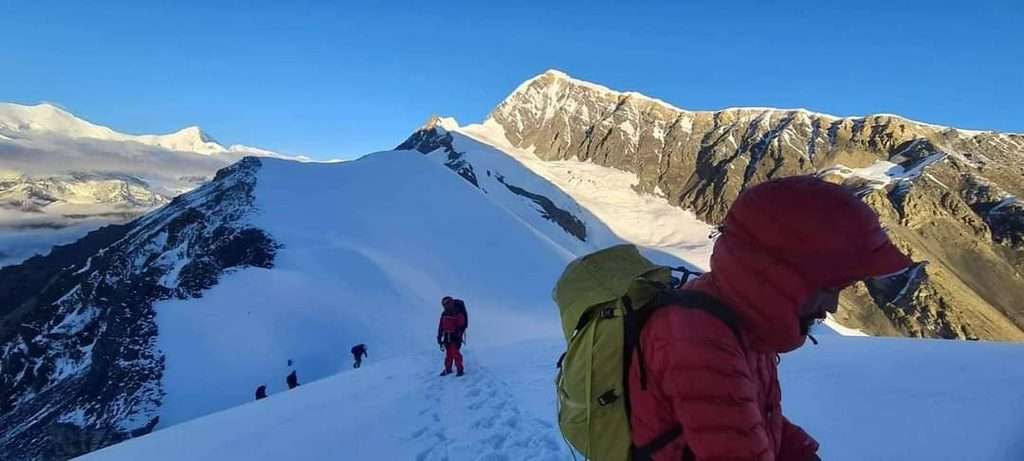
- Glacier Travel: You move across crevassed glaciers in groups tied together with ropes, under the careful supervision of your guides.
- The Technical Section: When you get to the part of the route with the fixed rope-where you attach your ascender and harness to the safety lines-make sure to match your breathing to the slope.
- Sunrise at the Summit: You reach the summit at the same time that the golden morning light shines upon the surrounding Himalayan mountains. Because of the extreme cold and the thin air, the celebrations at the summit usually last between 15 and 30 minutes before the descent starts.
- The Descent: A day involving a round trip that lasts between 8 and 12 hours. The guides strictly adhere to the predetermined turn-around time in order to ensure safety no matter how far there still is to go to the summit.
Weather Windows and the Best Season
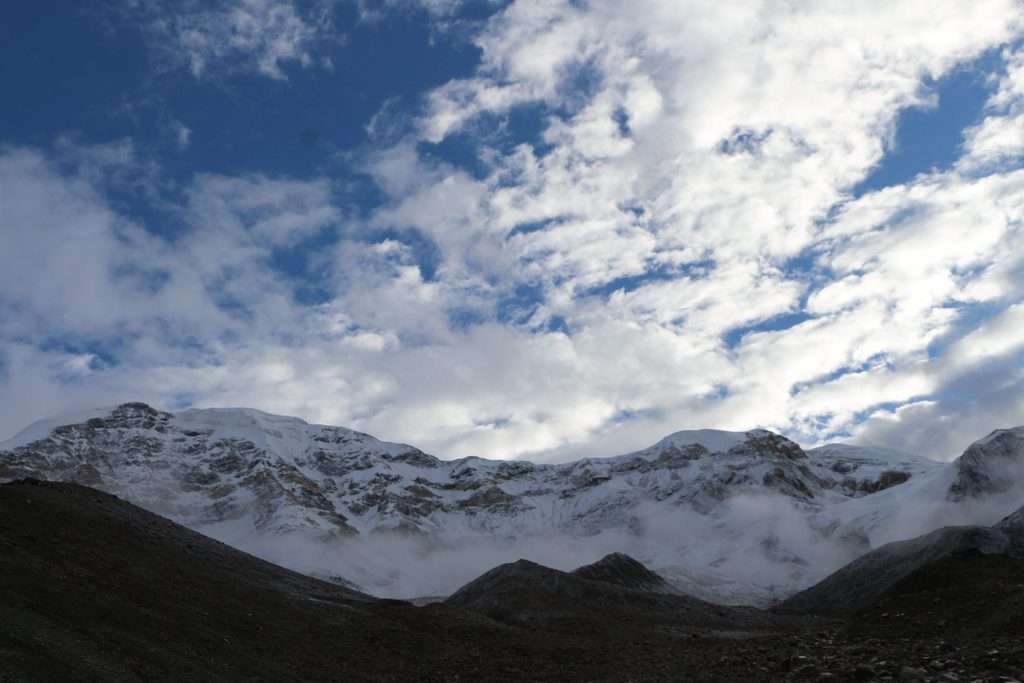
It is the favorable weather windows that determine whether a summit push is successful. The main climbing seasons in Nepal are Spring (from March to May), when the rhododendrons are in bloom and the day temperatures are stable, and Autumn (from September to November), when clear skies follow the monsoon season.
Professional expedition leaders keep a continuous watch on the forecasts by referring to data provided by the Department of Hydrology and Meteorology, Windy, and Mountain-Forecast. Since strong high-altitude winds and sudden snow squalls have the potential to delay the plans, all itineraries organized by Explore Himalaya contain extra spare days as a contingency.
For more information, see our guide at Best Time to Trek in Nepal.
Fitness, Skills, Safety and Responsible Climbing
To prepare for Himalayan peak climbing as in Nepal, one should carry out structured training three to five months before arriving. This training should concentrate on improving cardiovascular endurance, practicing stair climbing while carrying a weighted backpack, and conditioning the legs.
- Pre-Climb Training: When you reach base camp, your guide will carry out a required training session on the correct way to walk using crampons and ice axes, on how to make a self-arrest with an ice axe, and on the safe use of ascenders on fixed lines.
- Comprehensive Insurance: Make sure that your travel insurance policy specifically includes coverage for emergency helicopter evacuation and for mountaineering carried out at altitudes above 6,000 meters.
- Ethical Travel: Apply the Leave No Trace principles, back local teahouse economies, and make sure that porters are given fair wages, appropriate clothing, and safe working weights.
If you’d like some structured preparation plans, see Nepal 6000m Peak Climbing Training Guide, Guide to Training for Mountaineering, Insurance Policy Peak Climbing NMA, and Leave No Trace Responsible Trekking.
Is It Right for You? Final Thoughts and Next Step
Taking on Himalayan mountain climbing is a significant milestone which calls for respect, thorough preparation, and resilience. If you have crampon-compatible mountaineering boots, undergo proper training, and receive expert logistical support, then you can guarantee a safe and memorable experience.
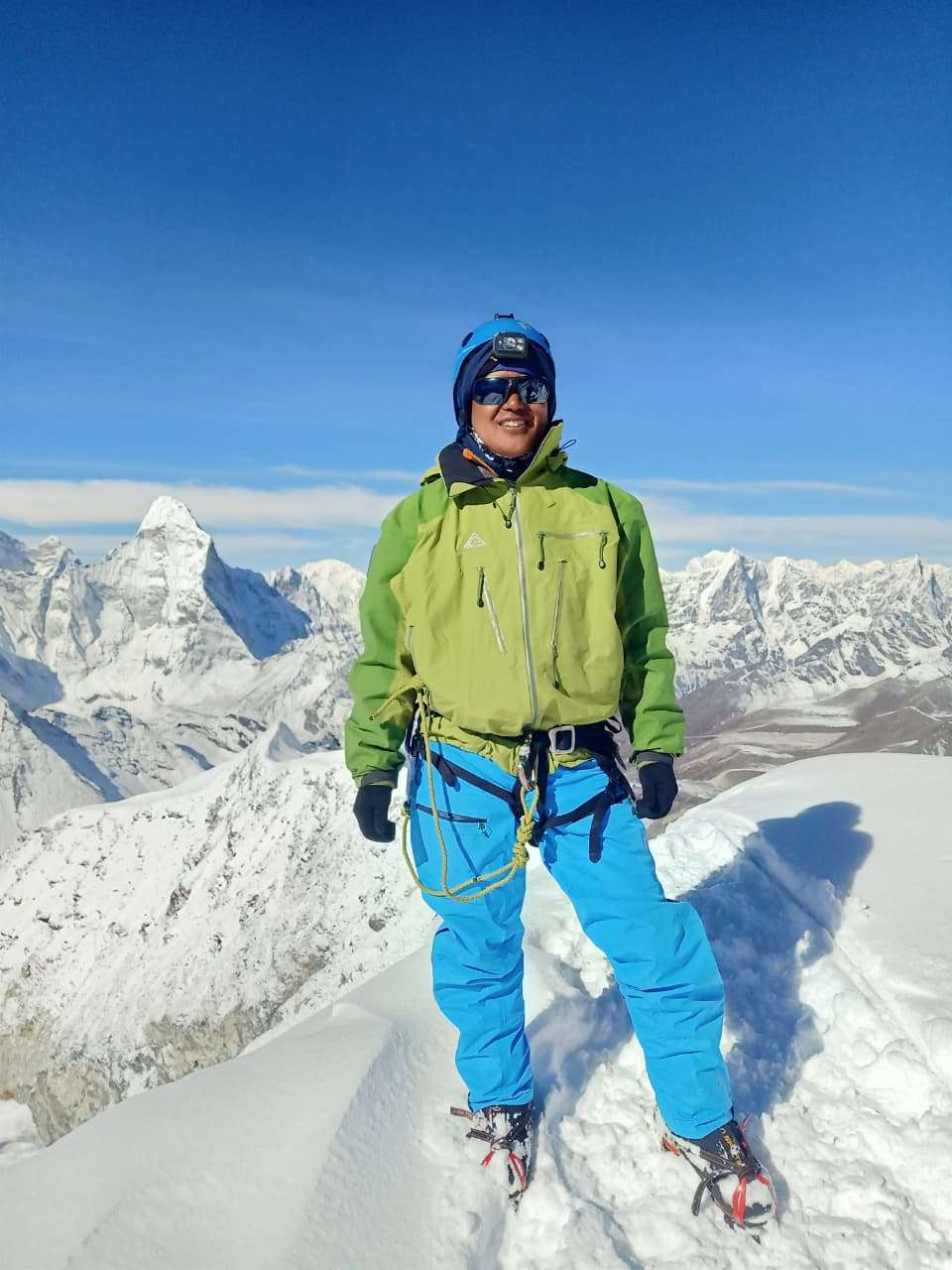
“The mountains are calling, and if you have the proper preparation and some expert guidance your dream of reaching the summit of the Himalayas is completely feasible.” – Explore Himalaya Expedition Team
Why not take the next step? Get in touch with Explore Himalaya Travel and Adventure now to create your personal climbing itinerary.
Frequently Asked Questions
Although trekking peaks such as Mera Peak and Island Peak, which do not call for any previous experience in technical rock climbing, should by no means be looked upon lightly, they do require a high level of cardiovascular endurance, strong legs, and mental resilience in order to cope with the cold and the thin air. The trekking on the approach will last between 5 and 7 hours each day and end with a demanding summit day that can last as long as 12 hours. It is essential to have proper endurance training, to carry out stair training, and to prepare mentally if one is to be successful.
You don’t need a formal background in mountaineering if you’re planning to climb entry-level mountains such as Yala Peak or Mera Peak. That said, it is strongly advised that you have some previous experience in high-altitude trekking so that you’ll know how your body responds to altitude. When you’re going to tackle the technical parts of mountains like Island Peak, our licensed guides with Explore Himalaya hold hands-on training sessions at the base camp where they teach you how to walk in crampons, how to handle fixed ropes, and also how to safely use a mechanical ascender (jumar) and ice axe.
Yala Peak is the simplest choice since its elevation is manageable at 5,500 m and the snow slope is non-technical and can be approached on foot. Of the peaks at 6,000 m, Mera Peak (6,476 m) is technically simple-mainly involving a long non-technical walk across a glacier-even though its high altitude makes it physically demanding. On the other hand, Island Peak (6,189 m) is lower than Mera but more technically difficult because of a steep 100-meter headwall, the need to travel on a crevassed glacier, and a narrow and exposed summit ridge.
A usual summit day involves a demanding journey of 8 to 12 hours. You’ll need to get up between 11:00 PM and 1:00 AM in order to begin with a headlamp, all in temperatures that are well below freezing. Starting early enables you to traverse the snow and glacier areas while the ice is still frozen and solid, thus making it possible to reach the summit during the stable morning weather periods. The way back down from the summit to either high camp or base camp also demands the same level of concentration and takes up about 3 to 5 hours of the total time.
You should have some technical equipment such as a harness, a climbing helmet, crampons and ice axes, carabiners, gaiters, and rigid crampon-compatible mountaineering boots (boots that are double and rated for use down to -30°C). Together with this, you’ll need clothing suitable for high altitudes, such as a down jacket with an 800-fill rating, a windproof shell, and thick gloves. It’s not necessary to buy all of these items; both high-quality technical gear and warm clothing can be rented or bought at reasonable prices in Kathmandu or Namche Bazaar.
To prevent acute mountain sickness (AMS), you must stick to high-altitude acclimatization schedules that observe the ‘climb high, sleep low’ strategy. You should walk at a slow and steady pace, drink between 4 and 5 liters of fluid each day, eat meals that are high in carbohydrates, and avoid alcohol. It is advisable to get medical advice from a doctor before setting off on your trip regarding the use of Diamox (acetazolamide). Most important of all, if you experience any early symptoms-such as continuous headaches, dizziness, or nausea-you should immediately tell your guide so that they can keep an eye on your safety.
The best times of year for climbing in Nepal are the spring (from March to May) and the autumn (from September to November). During spring the temperatures rise, the weather is steady and the lower trails are decorated with colorful rhododendron blooms. In autumn there are exceptionally clear skies after the monsoon, which give outstanding views of the mountains and reliable weather windows for attempts to reach the summit. Winter, on the other hand, is characterized by extreme cold and heavy snow that can obstruct the climbing routes, while in summer the monsoon brings rain, cloudiness and an increased risk of avalanches.
To climb a trekking peak that is 6,000 metres high in the Khumbu Valley you will need a number of official documents, namely the NMA Peak Climbing Permit issued by the Nepal Mountaineering Association, the Sagarmatha National Park Entry Permit and the Pasang Lhamu Rural Municipality Local Area Permit. In the event that your route goes through restricted areas further paperwork might be required. Before your trek Himalaya Travel and Adventure takes care of all the permit applications, the payment of royalties and the other administrative arrangements.
Yes, Lobuche East (6,119 m) is usually seen as more difficult and technically demanding than Island Peak; although both mountains have fixed ropes, Lobuche East includes longer sections of steep, continuous snow and ice climbing, as well as scrambling on loose rock and passing over a steeper and more exposed final summit ridge. It is the kind of climb that attracts people who already have some experience with crampons and fixed ropes and are seeking a slightly more technical alpine challenge.
Certainly, the Annapurna area has excellent high-altitude climbing opportunities, particularly Chulu Far East (6,059 m), which is a notable option. It is situated in the rain-shadow of the Manang Valley in the Annapurna Conservation Area and boasts dramatic, desert-like scenery together with a rich Gurung and Tibetan culture, as well as magnificent views of the Annapurna and Dhaulagiri mountain ranges. The climb demands good trekking endurance, the ability to navigate glaciers, and awareness of crevasses, thus making it a wonderful alternative to the more crowded Khumbu peak routes.
Recommended Blogs

Quick Contact
Testimonial

Apr 2023 I had an incredible experience trekking to Everest Base Camp with Explore Himalaya. Our guides were absolutely amazing. They provided us with exceptional support and guidance throughout the journey. The porters deserve special recognition too for their hard work and dedication. The entire journey was filled with breathtaking views and unforgettable experiences. From the start until the conclusion , every moment was filled with awe and wonder.I highly recommend Explore Himalaya for anyone seeking an unforgettable trekking experience in the Himalayas. Thank you to all the the staff, for making our journey truly exceptional!
Andrea C

13 Day Manaslu Circuit Trek Nov 2018 We have just returned to Kathmandu after a wonderful trek around the Manaslu circuit, starting in Soti Khola and finishing in Jaget. The trek and transport out and back to Kathmandu were very well organized. Our guide, Bharet Rana was excellent, arranging our tea-house accomodation and meals each day, without hitch. He was always good humoured and provided an interesting commentary on sights along the way.
John Chew

Our Everest Base Camp trek was a wonderful and memorable one. Everything was very well organised. Thank you Explore Himalaya and the staffs for such an excellent service. We were taken care of from the moment we landed in Ktm till the day we left. The Guides and the Porters team of Explore Himalaya are very friendly and helpful. They took care of every little things during our trek. Some walked faster, some slowly and few could not but No one was left behind. They walk with your pace and motivates you until you get up.Anuj Pandey, MD of Explore Himalaya was available 24 hours a day when anybody was in need, he even flew to Namche to check if everything was going well and if everybody was doing good. The Guides Bibek Pandey, Bhuwan Tamang and Ram Rajbhandari along with their 5 Porters were the main pillars who made our mission accomplished.I'd highly recommend anybody who wants to travel to Nepal to contact Explore Himalaya and get themselves spoilt and entertained with their excellent service.
Sujeeta Shahi

Helicopter flight to Everest basecamp Mar 2023 Organized for us a life time experience by helicopter to the base camp. Very well organized and all what has been promised was delivered. Would highly recommend this service.
Stefan M
Recommended On.


Partners


Member Of


Handling Events


Audited By


